
Avoid These 5 Turnover Traps That Drain Rental Income From LA Landlords
Discover the hidden mistakes that increase vacancies, drive away quality tenants, and cost Los Angeles property owners thousands in lost rental income every year.

Ask a Los Angeles landlord what their biggest expense is and you'll hear "the mortgage," "property taxes," maybe "insurance." Almost nobody says the true answer for most small portfolios: turnover. Every time a tenant leaves, costs for repairs, make-ready cleaning, vacancy marketing, and unit showings arrive. A single turnover on a unit in LA runs $2,500–$6,000 and that doesn’t even account for the lost rent while the unit sits vacant.
As retention focused property managers, we know retention isn't a soft skill; it's one of the largest controllable profit levers in rental ownership. We talk to our tenants often and respond to their issues quickly. It’s one reason many apartment owners in LA trust us. Our portfolio's consistently low vacancy rates are the clearest evidence that our approach works.
Now the multiplier: a unit that turns every year versus every three years doesn't cost a little more; it costs triple the turnover burden while also resetting the tenant-quality lottery each cycle. Retention isn't a soft skill; it's one of the largest controllable profit levers in rental ownership. As retention-focused property managers helping LA landlords keep great tenants and steady cash flow, we track renewal rates the way other firms track leases signed and the data keeps teaching the same lesson: tenants rarely leave for random reasons. They leave through five predictable traps, each one avoidable. Here they are, with the fixes the same retention framework behind apartment management Los Angeles owners hire us to run.
Trap #1: Slow Maintenance Response The #1 Silent Evictor
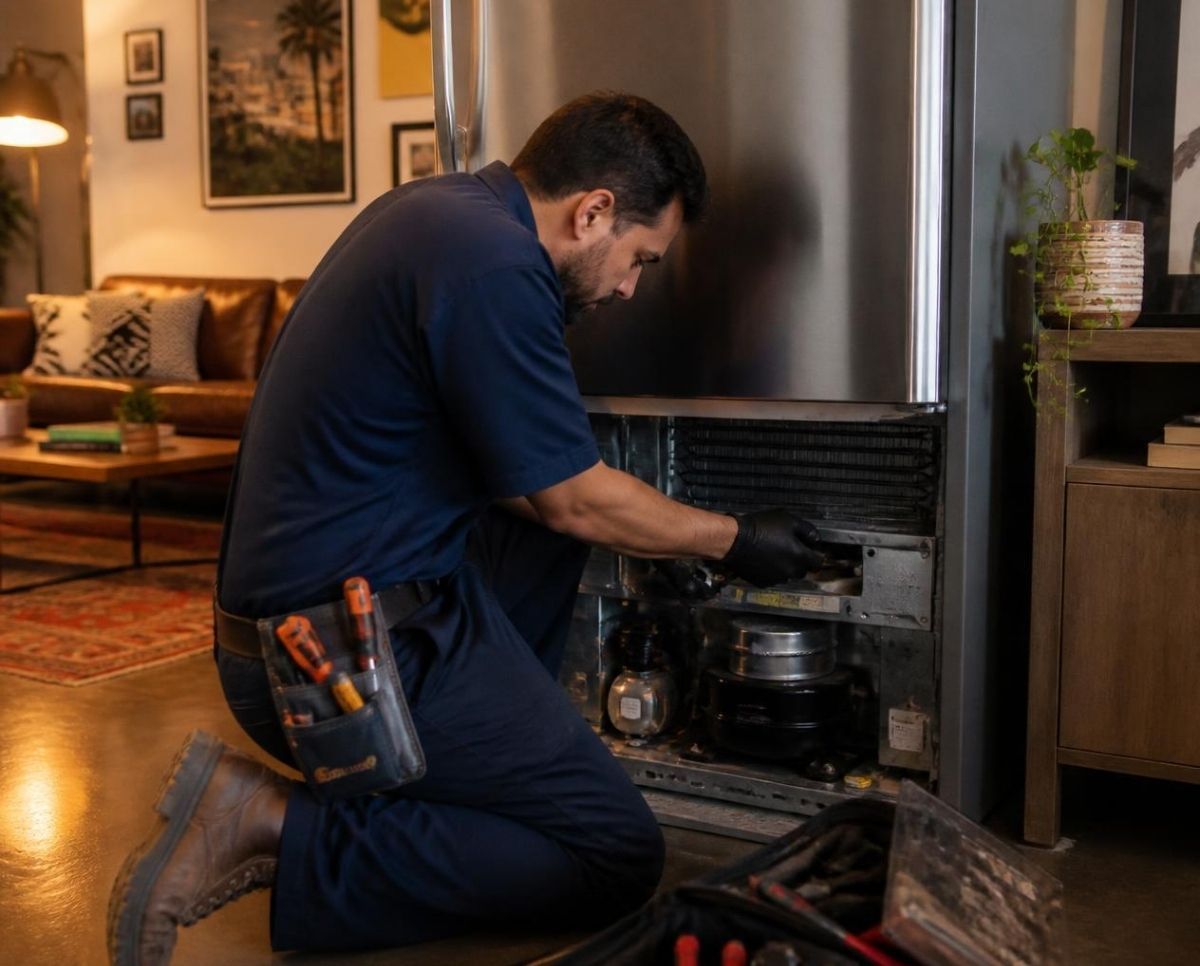
Survey after industry survey lands on the same finding: maintenance experience sits at or near the top of why tenants don't renew ahead of nearly everything except a life event. And here's the brutal asymmetry: the tenant who leaves over slow repairs is disproportionately your best tenant the responsible professional with options while the tenant who tolerates neglect is the one you least want to keep.
The trap is subtle because each individual delay feels defensible. The dripping shower "isn't urgent." The sticking window "can wait for the handyman's next trip." But tenants don't experience work orders; they experience how it feels to live in your property and every slow response teaches them their comfort is a low priority, a lesson they act on at renewal.
The fix: a 24-hour acknowledgment standard on every request (acknowledgment, not necessarily completion tenants forgive scheduling; they don't forgive silence), genuine emergency availability, and closure communication when work completes. Track your own response times honestly; if you can't sustain them across a job and a life, that's not a character flaw it's a staffing decision waiting to be made.
Trap #2: The Clumsy Renewal Maximizing One Year, Losing Three
The renewal conversation is where more LA rental income is destroyed than anywhere else, in two opposite ways:
The greedy renewal: pushing the maximum legal increase on a great tenant because the market technically allows it then watching them leave, and spending far more than the increase was worth on turnover. Run the real math: a $150/month push that triggers a move-out costs you $1,800/year in attempted gains against $4,000–$8,000 in turnover plus the risk of a worse replacement tenant. On covered units, remember increases are capped anyway (statewide rent-cap rules and stricter local ordinances in the City of LA, Glendale, Pasadena, and Santa Monica), so the upside of aggression is limited while the downside isn't.
The silent renewal: the opposite failure never raising rent at all for fear of rocking the boat, until the unit sits 20% under market and the eventual correction is so large it guarantees a departure or a legal ceiling problem.
The fix: small, consistent, well-communicated annual increases within legal limits, opened 90 days before expiration with a genuinely warm renewal offer. Predictability retains: tenants budget for modest annual adjustments; they flee surprises. Pair the increase with something a maintenance touch-up, a carpet clean and renewal rates climb further. This calibration, unit by unit against live comps and current law, is core work inside renewal-driven property management for LA rental owners.
Trap #3: A Bad First 30 Days Turnover Decided at Move-In
Retention research keeps confirming what intuition suggests: the renewal decision starts forming in the first weeks of tenancy. A move-in with a dirty oven, a dead outlet, keys that don't work, and no clear way to reach anyone plants a conclusion this landlord doesn't have it together that fifty on-time months won't fully erase.
The fix is a move-in system: a genuinely complete make-ready (inspected against a checklist, not a glance), a documented walkthrough with the tenant, a one-page orientation (trash day, parking, shutoffs, how to submit requests, emergency line), and a two-week check-in call that catches the small punch-list items while goodwill is highest. Cost: an hour or two. Return: a tenancy that starts loyal.
Trap #4: Communication Neglect The Relationship That Only Calls to Collect
Between move-in and renewal, many landlords go silent except for rent matters then are surprised the relationship has no equity when renewal season or a rough patch arrives. Tenants renew with landlords they trust, and trust is built in small, unforced moments: advance notice before vendors arrive, a heads-up about the building's plans, a fast honest answer even when it's "not yet," respectful handling of the one late month in an otherwise perfect record.
The fix costs almost nothing: proactive notice on anything affecting their home, quarterly touchpoints (even a seasonal maintenance-tips note), and above all responsiveness as a policy. At multifamily properties this scales into community texture clean common areas, consistent rule enforcement, neighbors who were screened as carefully as they were which is why buildings run by professional multi-family residential management post retention numbers scattered DIY buildings rarely touch. The same logic governs associations: communities with responsive, transparent HOA management services hold both residents and property values measurably better than boards running on volunteer exhaustion.
Trap #5: The Botched Turnover Itself When Leaving Becomes Expensive Twice
Some turnover is inevitable jobs relocate, families grow. The final trap is letting unavoidable turnover become maximally expensive through a slow, reactive process: waiting until keys are returned to think about make-ready, sequential instead of parallel vendor scheduling, marketing that starts after paint dries, and deposit handling so sloppy it generates disputes (and reviews that poison future leasing).
The professional sequence runs in parallel: pre-move-out inspection the week notice arrives (scope the make-ready early); vendors scheduled before vacancy begins; marketing live with existing photos while work finishes; showings queued for day one of availability; deposits itemized and returned strictly inside California's 21-day law. The difference between a reactive and a parallel turnover is routinely two to four weeks of vacancy at LA rents, $1,500–$4,000 per event, every event. Compressing that cycle is exactly what systematized make-ready and leasing operations for Los Angeles landlords are built to do and for single-family owners, where one vacancy means 100% of the property's income stops, the compression matters most of all, which is why it anchors our single family home management workflow. Even at the portfolio-planning level, expected turnover economics shape what's worth building and buying unit mixes and amenity choices that retain tenants are a standing input in our development consulting engagements.
The Retention Flywheel: Why Fixing One Trap Fixes the Others
Here's the encouraging part owners discover once they start: the five traps aren't independent they share machinery, and improvements compound. Fast maintenance response (Trap 1) builds the relationship equity (Trap 4) that makes a reasonable renewal increase land softly (Trap 2). A strong move-in (Trap 3) creates the reporting culture that surfaces small repairs early, which keeps make-readies light and turnovers fast when they finally come (Trap 5). Light make-readies mean better-presented units, which attract better applicants, who become longer-staying tenants and the wheel turns again.
The flywheel runs in reverse just as powerfully. One slow repair sours the relationship; the soured relationship makes the renewal adversarial; the adversarial renewal produces a spiteful move-out with a heavy make-ready; the long vacancy pressures a rushed screening; the rushed screening seats a weaker tenant and the next cycle starts worse than the last. Most "unlucky" landlords aren't unlucky; they're on the wrong side of the wheel. The practical implication: don't try to fix all five traps at once. Fix your worst one for most self-managing owners it's response time and watch the adjacent numbers move within two renewal cycles.
Frequently Asked Questions
What does one turnover really cost on a typical LA unit? Itemize it: 2–4 weeks vacancy ($1,200–$4,500 at LA rents), make-ready ($800–$3,000), marketing and screening ($200–$500), leasing time or fee ($500–$2,500), plus any concession. The honest range is $3,000–$8,000+, which is why a $150/month renewal standoff is almost never worth losing a good tenant over.
Should I offer renewal incentives? Modest ones outperform their cost: a carpet clean, a fixture upgrade, or a small credit paired with a reasonable increase reads as respect and routinely tips renewals. What you're really buying is avoided turnover at pennies on the dollar.
How early should renewal conversations start? Ninety days before lease end. It's enough time for the tenant to decide calmly, for you to course-correct on any grievance driving hesitation and, if they're leaving anyway, to launch the parallel turnover sequence with maximum runway.
My tenant is difficult. Should I still fight for the renewal? Retention is for tenants worth retaining. Chronic late payment, lease violations, or property abuse flip the analysis there, a planned, lawful non-renewal (where just-cause rules permit) or a firm renewal at full legal terms is the right business decision. The traps in this article drain income by losing good tenants; keeping bad ones is a different leak entirely.
Do these traps apply to single-family rentals or just apartments? Single-family owners face them with higher stakes, not lower: one house means one tenancy, so a preventable move-out takes 100% of the property's income offline rather than a twelfth of a building's. SFH tenants also skew toward families anchored by schools and space the longest-staying profile in the market when served well which makes the retention upside proportionally larger too.
Key Takeaways
- Turnover is a $3,000–$8,000+ event; retention is one of the largest controllable profit levers in LA rental ownership.
- The five traps slow maintenance, clumsy renewals, bad move-ins, communication neglect, and botched turnovers are systems failures, not tenant randomness.
- Small consistent increases retain; both greed and silence at renewal eventually evict your best tenants.
- When turnover does come, parallel processing saves two to four weeks of vacancy every single time.
- Track renewal rate, tenancy length, days vacant, and cost per turnover the numbers will tell you which trap is draining you.
Related Resources
- The complete playbook for cutting tenant departures through smarter day-to-day management
- How response-time and vendor advantages show up as returns owners never itemize
- Why self-managed properties bleed income in exactly the categories this article measures
- Keeping Valley apartment residents settled and satisfied through the year's trickiest season
- Pricing and market-knowledge disciplines that keep units full between rare turnovers
Conclusion
LA landlords lose more income to turnover than to any market force and unlike the market, turnover answers to management. Close the five traps and the compounding begins: longer tenancies, rarer vacancies, better applicants attracted by a property's reputation, and cash flow that finally looks like the pro forma. Every trap in this article has the same underlying fix a system running consistently and if building that system yourself isn't how you want to spend your years of ownership, our Sherman Oaks property management team already runs it across thousands of tenant relationships.
Find out what turnover is really costing you. Request a Free Property Audit including a retention scorecard for your property and the specific trap draining it most.